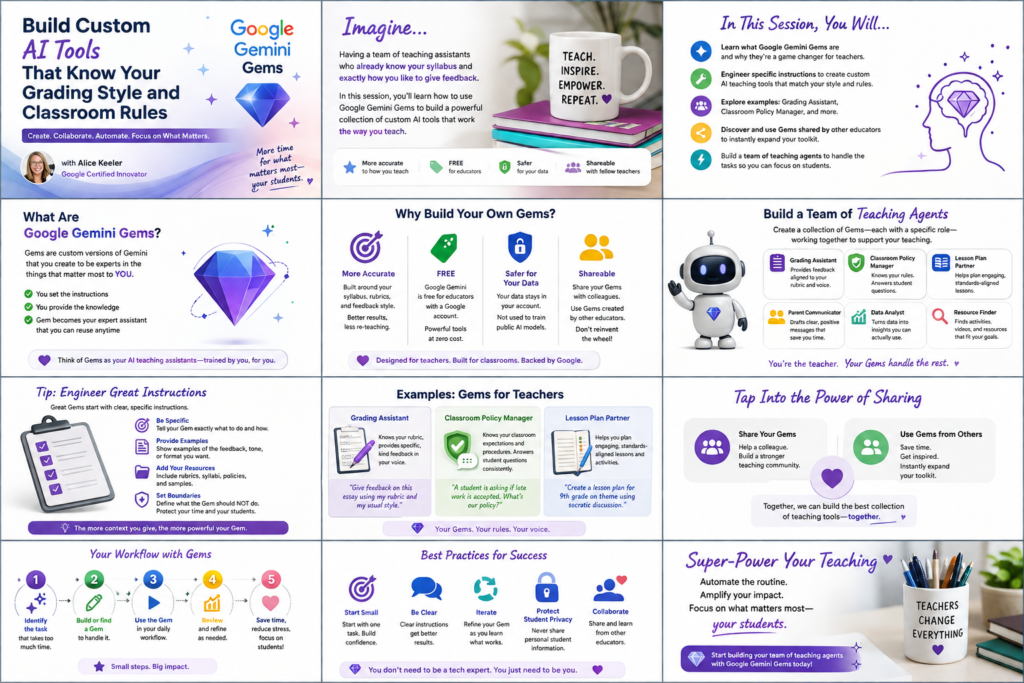





I am doing a summer series of virtual workshops with Orion Education and Training. “Today” (you probably aren’t reading this today) the topic is “Transforming Slide Decks into Active Learning.” By registering you can access all of the recordings and resources for the workshops.
Tools do not teach. As always, it is what you do with them that makes the difference.
What Is Active Learning?
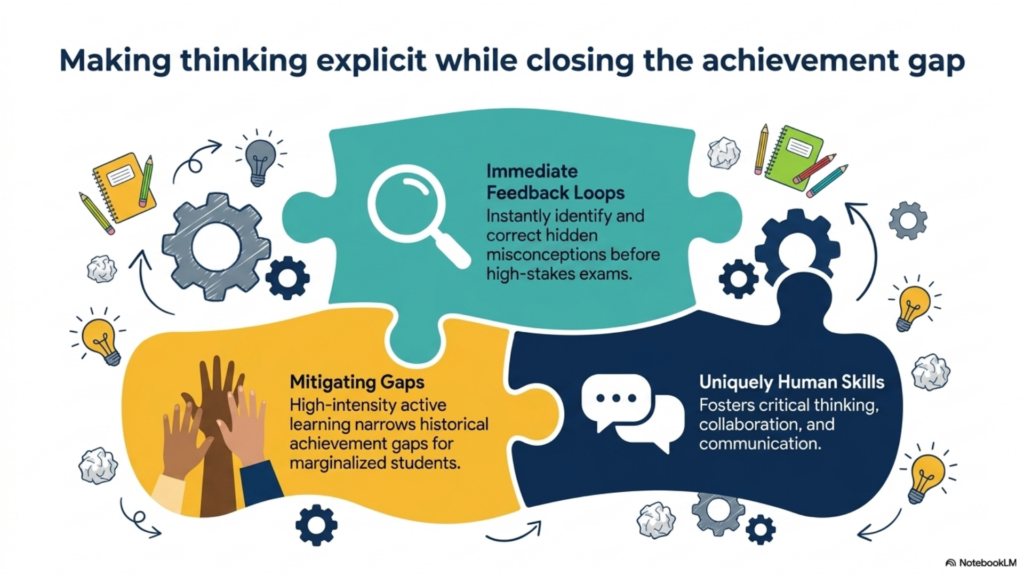
Active student engagement matters. When students engage in active learning strategies they learn more. The rub is, they don’t think they are learning more. Hearing content and actually learning it is two different things. Students need to actively engage with what they are learning for it to stick.

Active learning strategies offer students powerful opportunities to participate directly in their own learning through hands on activities, reflection, and peer collaboration. Students take the lead by exploring concepts, explaining ideas, and learning from their own mistakes.
Navigating the Fluency Paradox
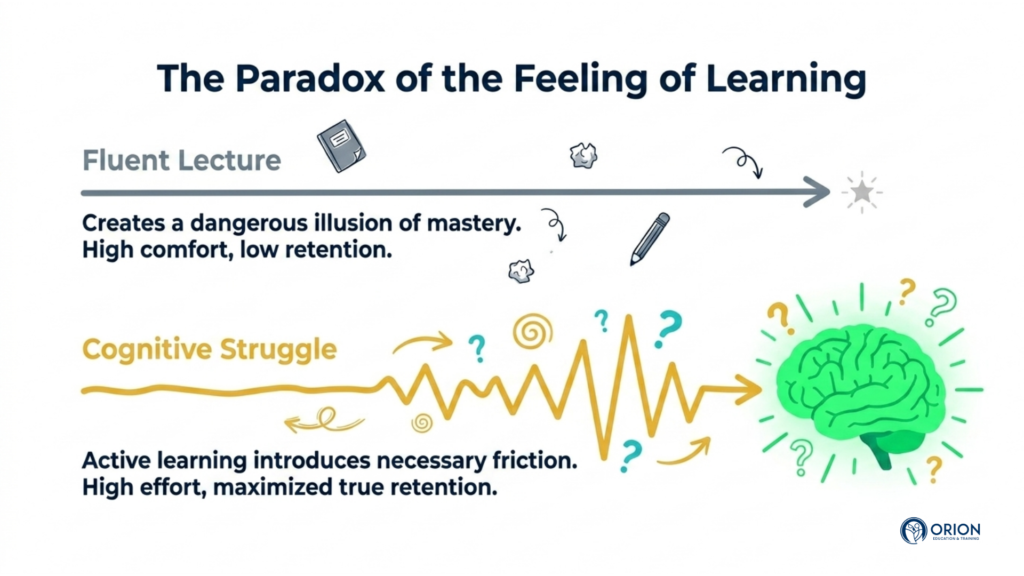
Implementing these active strategies can also help us navigate a common instructional challenge known as the Fluency Paradox. A great lecture can create a false state of cognitive ease for the audience. Because the instructor does the heavy lifting of organizing and formatting the data, the experience feels incredibly seamless to the students.
Unfortunately, that smoothness can be deceptive.
A landmark study led by Louis Deslauriers found that while 62.5% of students in passive lectures felt more prepared and believed they learned more, they actually performed significantly worse than students in active environments.
True, deep learning often requires a bit of cognitive friction.
It invites the intellectual effort of reconciling new information with prior knowledge, mapping out relationships, and constructing personal meaning. When we look past the superficial comfort of a quiet, compliant classroom, we can design experiences that invite this productive struggle.
Cognitive Load and Mayer's Principles
The trick is to support active, real time processing without overwhelming the brain’s limited working memory. Cognitive Load Theory outlines that our brains use separate visual and auditory channels to process incoming data. If we display a text heavy slide and read it aloud word for word, we jam both channels simultaneously, creating a severe cognitive bottleneck.
Instead, we can leverage Richard Mayer’s multimedia principles by keeping on screen text sparse. Put the details into the speaker notes and use visual cues like bold blocks or arrows to guide the eye. You can even use
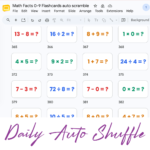
You can even use physical or digital manipulatives, such as vocabulary card sorts, timeline pieces, or diagram components. Students can then actively organize these elements on their desks to visually map out relationships in their own words.

Delivering high-quality content, tools, and support for reading comprehension
ReadWorks is a free, research-based website designed to support educators in teaching reading comprehension across grades K–12. It provides a rich library of high-quality, standards-aligned instructional content.
Article-A-Day, helps students build knowledge and vocabulary in just 10-minutes a day.
Structuring Active Note Taking
When implementing active note taking, we want to ensure that student focus is on processing rather than copying information.
Have students divide their paper in half. Input and Output.
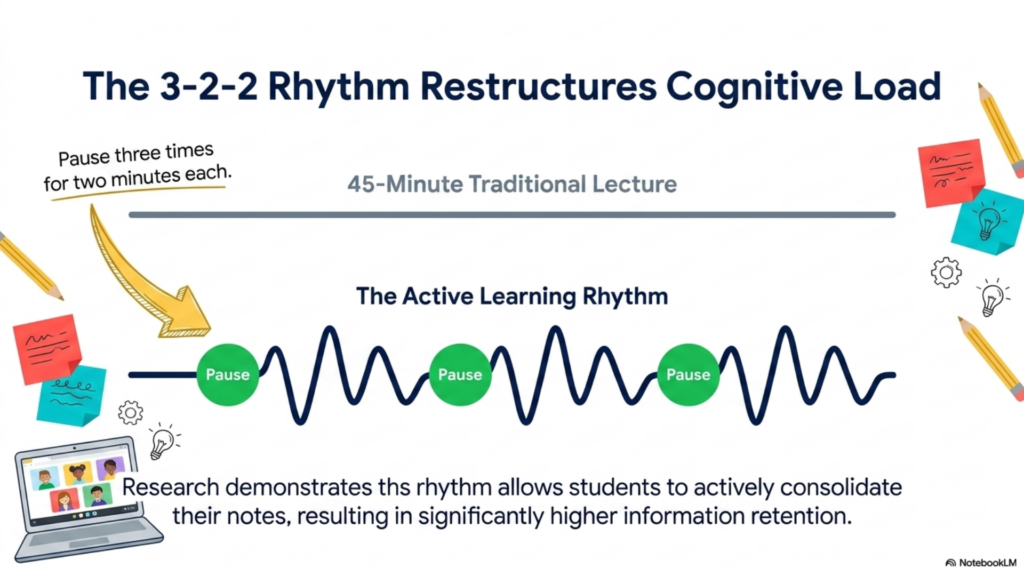
Introduce a new concept for 10 minutes.
During this time, students use the left page, or the Input Zone, to record key facts, draw a diagram, or list raw observations. Because this segment is brief, students can focus on capturing the most important baseline information without feeling overwhelmed by a long, uninterrupted stream of talk.
Students Use the Output Zone
Students now spend five minutes translating those notes into their own unique expressions. Some draw simple visual cartoons or metaphors showing how the concept works. Others map out vocabulary terms using connecting lines, while some write a brief, three sentence explanation styled as a letter to a friend. The student chooses the style of representation, which builds deep personal ownership.
Utilize Peer Exhange
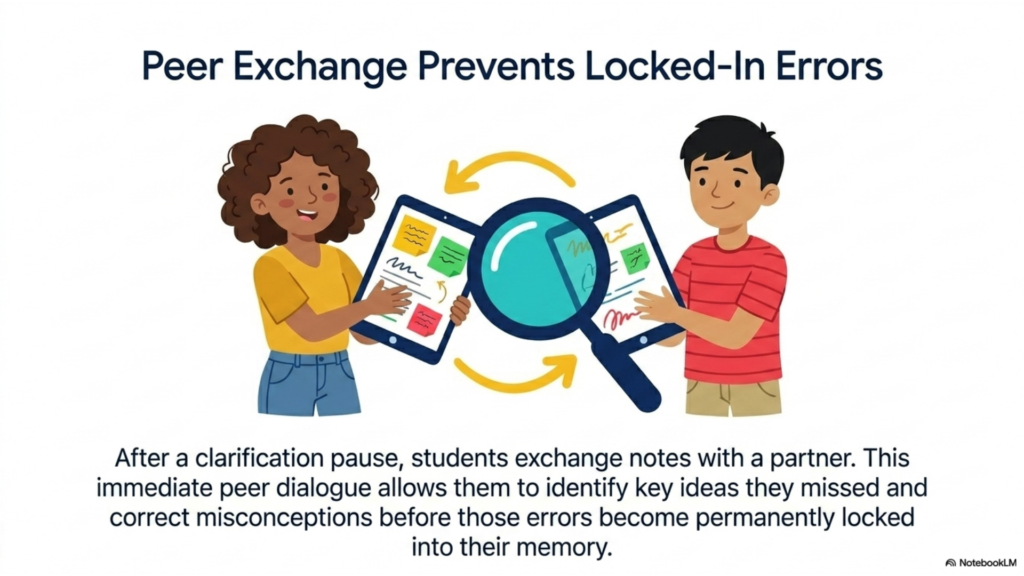
To close out the note taking cycle, students swap notebooks with a partner. They read through each other’s pages, compare their visual diagrams, and discuss their summaries. This quick, conversational checkpoint is incredibly powerful. It allows students to check their own understanding, learn new ways of representing ideas from their peers, and ask clarifying questions before the lesson moves forward.
Generative Sketching and Visual Modeling
Encourage students to translate abstract concepts into simple sketched icons, arrows, and visual flowcharts. Combining linguistic notes with visual models helps the brain build much stronger mental schemas
The Twenty Word Synthesis Challenge
To encourage critical thinking, challenge your students to summarize an entire section of their notes in twenty words or less. Because they are restricted to a tiny word count, they cannot simply copy definitions word for word. They must actively evaluate the information, decide what truly matters, and discard the rest.
Marginal Retrieval Cues
Ask students to use the margins of their pages to write three to five self quizzing questions based on their notes. Later, when reviewing, they can cover the main body of their notes and use these marginal questions to practice active retrieval, which is one of the most effective ways to study.
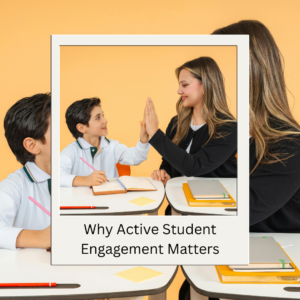
Why Active Student Engagement Matters
Active student engagement is about much more than simply adding interactive activities to fill class time. It is about fundamentally reshaping how students connect with knowledge through critical thinking.
Equity and Community in the Classroom
Bringing active strategies into daily instruction also serves as a powerful equalizer. When we provide structured opportunities for students to share their ideas, collaborate with their peers, and learn through low stakes trial and error, the traditional barriers to learning begin to dissolve. This inclusive approach fosters a genuine sense of belonging and community, transforming the classroom into a supportive space where every mistake is welcomed as a natural step toward growth.
active, collaborative, learning can sometimes be noisy. However we are helping our students become self reliant, confident thinkers. We give them the tools to not only succeed on their next assessment, but to carry a genuine joy for discovery into their future lives and careers.