
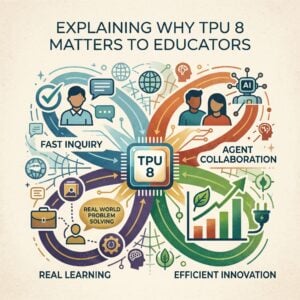



Google just updated the engine that runs the AI tools we use in the classroom. This eighth generation hardware, called TPU 8, features two specialized chips: the TPU 8t and the TPU 8i. While the 8t focuses on building and training smarter models, the 8i is designed to power the actual interactions we have with AI in real time. This leap in hardware provides the foundation for a future where technology acts as a true partner in the learning process.

Delivering high-quality content, tools, and support for reading comprehension
ReadWorks is a free, research-based website designed to support educators in teaching reading comprehension across grades K–12. It provides a rich library of high-quality, standards-aligned instructional content.
Article-A-Day, helps students build knowledge and vocabulary in just 10-minutes a day.
Accelerating Authentic Inquiry with TPU 8i
When students engage in inquiry based learning, they need tools that move at the speed of their curiosity. The TPU 8i chip is specifically designed to eliminate the lag that often breaks the momentum of a great lesson.
Facilitating Real Time Peer Feedback
In a collaborative classroom, students often wait for teacher feedback before moving to the next stage of a project. TPU 8i powers AI agents that can provide immediate, formative feedback on a draft or a math problem. This allows students to iterate on their work instantly, keeping them in a state of flow and allowing the teacher to facilitate deeper discussions rather than managing a queue of questions.
Supporting Dynamic Simulations
The 8i chip handles complex “inference” tasks, meaning it can run sophisticated, interactive simulations without slowing down. Students can use these tools to model real world systems, such as environmental changes or economic shifts, where the AI adjusts the variables instantly based on student input. This level of responsiveness encourages students to test hypotheses and see immediate results.
Scaling Student Agency with TPU 8t
The TPU 8t chip is the training powerhouse. It allows developers to create more specialized and reliable models that can support diverse student needs.
Building Specialized Accessibility Tools
Because the 8t can train models much faster, we can see more AI tools designed for specific learning requirements. This might include high quality speech to text for students with dysgraphia or real time translation that maintains the nuance of academic language for English language learners. This hardware makes it possible to scale personalized support that honors student voice and choice.
Creating Robust AI Agents
The 8t chip provides the heavy lifting required to build “agentic” systems. Instead of a simple chatbot, these chips power agents that can manage multi step workflows. In a classroom, a student might work with a “research agent” that helps organize a bibliography while a “creative agent” helps them storyboard a video project. The 8t ensures these agents are smart enough to understand the context of a student’s unique goal.
Meaningful Learning Through Technical Innovation
The real value of these two chips lies in how they empower students to move beyond compliance and toward creation. With this level of processing power, we can implement high level, research based practices.
Performance Based Assessments
TPU 8 allows for software that can analyze complex student portfolios. Instead of a multiple choice test, students can demonstrate their understanding through a performance task, like coding an app or designing a community garden. The AI can help track their progress across the 4 Cs: collaboration, communication, critical thinking, and creative thinking.
Global Communication and Collaboration
These chips support the massive data needs of real time global collaboration. Students in different parts of the world can work together on a shared digital canvas, with AI agents translating and summarizing their discussion in real time. This turns a standard lesson into an authentic, cross cultural experience that prepares students for the modern world.
Sustainable and Reliable Classroom Tech
Advanced technology requires a lot of energy, but TPU 8 is built to be significantly more efficient. This ensures that as we move toward more interactive, student centered classrooms, we are using tools that are both sustainable and reliable. By providing better “goodput,” these chips ensure the AI tools you rely on stay functional and responsive throughout the school day.
Doc to Slides
Quickly turn your Google Doc text into Google Slides
Created by AliceKeeler – Collects NO user data.